
The aim of the course is to prepare participants to provide advanced first aid in isolated locations (such as a wind turbine), where the arrival time of professional emergency services may be significantly delayed. An EFA first aider learns to support the casualty for an extended period using specialist medical equipment.
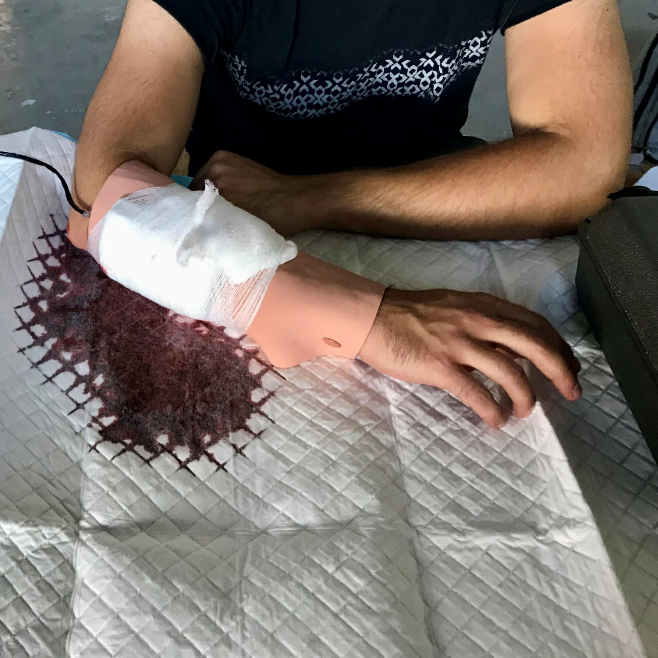

GWO Enhanced First Aid (EFA)
Course objective
Location: Gdynia
GWO compilance: V6
Price per person: 2500 zł
(about 575 €)
Course description
The training goes beyond the standard First Aid module. It focuses on rescue scenarios in confined spaces and at height. It covers:
- Advanced techniques for assessing the casualty (the (C)ABCDE protocol),
- Administration of medical oxygen and use of advanced airway management devices,
- Pain management and patient care during prolonged waiting for evacuation,
- Cooperation with telemedicine (consultations with a doctor via radio/telephone).
Duration
The course lasts 21 hours.
Prerequisites
- Possession of a valid WINDA ID number,
- At least 18 years of age,
- A valid GWO First Aid (basic) certificate,
- No medical contraindications to physical exertion (the training includes, among other things, transporting an injured person on a stretcher through narrow passages).
Outcomes upon completion
The participant is able to effectively stabilize casualties with life-threatening injuries, such as massive hemorrhages or multi-organ trauma. They are fully prepared to operate advanced medical equipment, including SKED-type stretchers, cervical collars, and oxygen therapy kits. Furthermore, they can efficiently take responsibility and act as the rescue operation leader at the scene until a doctor or paramedic arrives.
Certificate validity
The certificate is valid for 24 months (2 years). To maintain your certification, you must complete a refresher course within the last 2 months before the expiry date of your current certificate.
Information about the completed training will be recorded in the international GWO WINDA database. The digital record allows authorised employers to instantly verify your qualifications. For participants, this means easy confirmation of competence worldwide without the need for paper documents.
What to bring
- Valid ID card or passport,
- Comfortable work or sports clothing that may get dirty (exercises involving wound marking, movement in confined spaces),
- A change of shoes (preferably work or sports shoes with good grip).
- It is often recommended to bring your own notebook and pen to record vital signs during the simulation.

Send a course enquiry
Why choose us?
Certified and audited GWO training centre
We offer one of the broadest training portfolios on the market and operate in accordance with international Global Wind Organisation standards. The quality of our training, the competencies of our instructors and our infrastructure are regularly audited.
ONLY AT IM TRAINING: a globally unique PCTC crew course using a full-scale training facility
We have a specialist training ground where participants practise realistic scenarios, including firefighting operations on PCTC vessels, RO-RO vessels and ferries, as well as hazards associated with electric vehicle fires.
We were the first in Poland to introduce GWO High Voltage courses
We made competencies available in Poland that previously required training abroad, reducing the time companies need to prepare teams for onshore and offshore projects.
End-to-end training organisation
We manage the entire process, from agreeing a suitable date and arranging transport and accommodation to delivering the training and preparing complete documentation. We also provide end-to-end support for groups and teams travelling from abroad.
Realistic, modern training infrastructure
We train participants using specialist equipment, full-scale structures, training towers, simulators and a pool, so they can practise procedures rather than simply hear about them.
Partnerships with industry and academic leaders
We work with Energy Innovation in Norway and leading maritime institutions in Poland: Gdynia Maritime University and the Polish Naval Academy. We combine international industry experience with expert knowledge and the resources of Polish maritime universities.
We care about more than just training
See other Courses

GWO Basic Safety Training – Manual Handling Refresher (MH-R)
GWO compilance: V20
Course objective:
To refresh and reinforce safe techniques for lifting and carrying loads. The course aims to correct incorrect movement practices that may have developed during daily work, in order to effectively prevent injuries to the spine and musculoskeletal system.
480 zł netto + 23%VAT
about 110 €
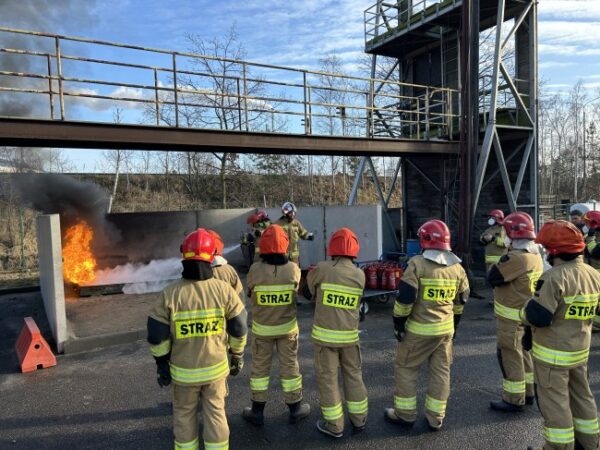
Training in advanced fire fighting – refreshment
Course objective:
During the course, participants learn about ignition sources, the properties of combustible materials, the causes of shipboard fires, and fire detection methods.
450 zł netto + 23%VAT
about 104 €
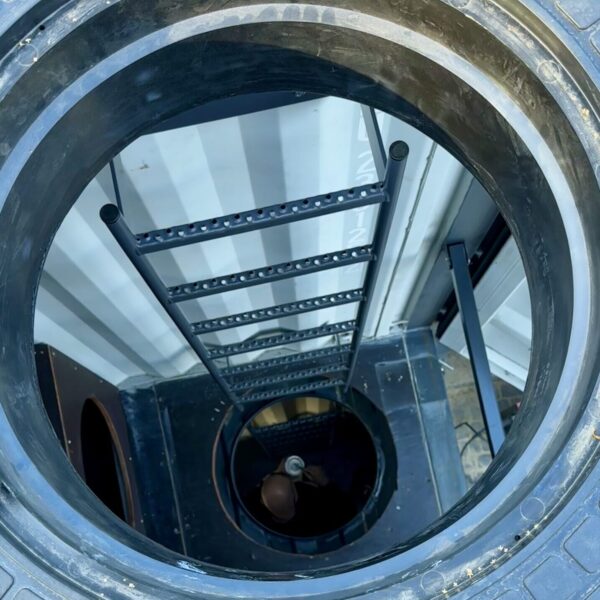
Confined Space Entry (CSE)
Inter Marine compilance: IMV1
Course objective:
To acquire the knowledge and practical skills necessary for safe entry, work and evacuation from confined spaces. The course teaches how to identify hazards (e.g. lack of oxygen, presence of toxic gases) and how to respond correctly in emergency situations in areas with restricted access.
850 zł netto + 23%VAT
about 196 €
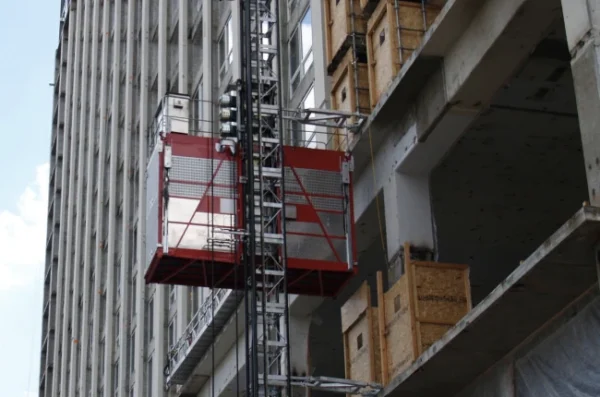
Winches for Moving Rail Wagons
Course objective:
Operation of winches for moving rail wagons along tracks.
2 500 zł netto + 23%VAT
about 575 €
Why do companies and course participants choose IM Training?
Average rating

Crew Manager
Employees return ready to work
The training is practical and delivered in conditions similar to real workplace situations. Our employees return with the required certificates, but above all with knowledge and skills they can use at work.
Course participant
I am very satisfied
I took two GWO courses and I am very satisfied. There was plenty of hands-on practice and realistic simulations, and the instructors explained everything clearly and patiently.
Operations Director
End-to-end support
IM Training efficiently organised training for our international team, including the logistics, language and formal requirements. Thanks to the effective coordination, we could focus on the project without involving our own team in organising the trip.
Course participant
Highly competent instructors
The practical sessions after the theory are eye-opening. The instructors are highly competent and the course was delivered thoroughly.
Offshore Project Manager
Fast scheduling and flexibility
The training dates were aligned with our team mobilisation schedule. The quick response, flexible approach and option to train a larger group on the same date made it significantly easier to prepare our employees for the project.
Course participant
Very good facilities and workstation preparation
A repair techniques course. Very good facilities and workstation preparation, efficient organisation and a high standard of practical training.
Course participant
The training material was thoroughly covered.
Very good training delivered by competent instructors. The sessions were engaging, the time passed very quickly and there was plenty of hands-on practice. The training material was thoroughly covered.
Course participant
Modern equipment, no nonsense
The working at heights course is mainly practical: equipment, fall protection and emergency scenarios. Everything was well organised, the instructors were direct and clear, and the equipment was modern. No nonsense.


Send a course enquiry