Skip to main contentSkip to footer
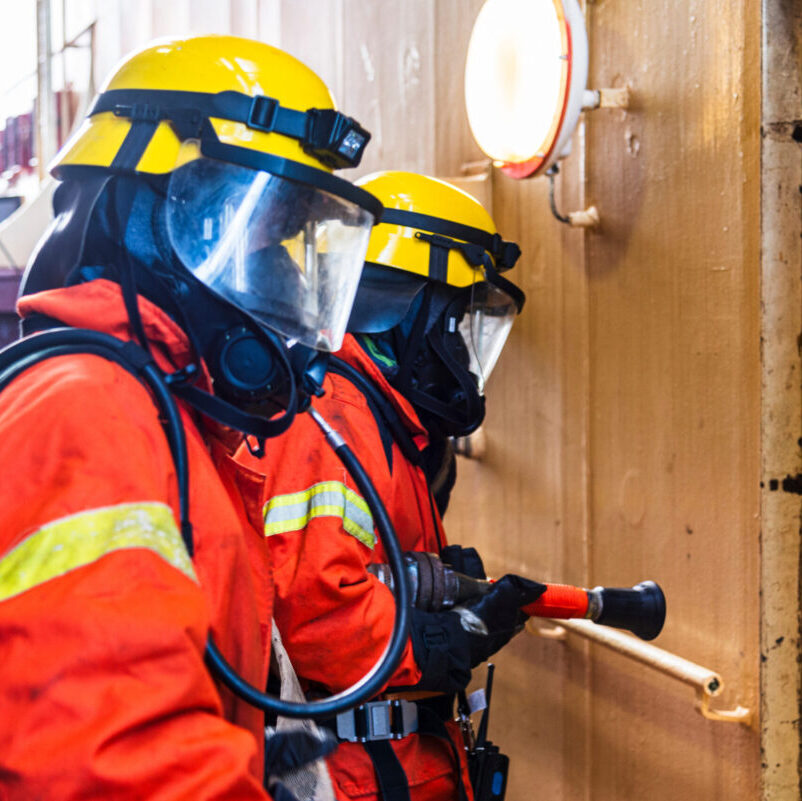
Na zdjęciu widać dwóch strażaków ubranych w czerwone kombinezony ochronne, żółte hełmy z przyłbicami oraz aparaty oddechowe. Pracownicy znajdują się wewnątrz drewnianego pomieszczenia i wyposażeni są w specjalistyczny sprzęt ochronny. Jeden z nich trzyma narzędzie z czerwonym uchwytem, przygotowując się do wykonania działań przy drzwiach lub ścianie.

Further Safety Training for Seafarers (FST)

SKU: IM-FST

Course objective

The aim of the training is to refresh and consolidate seafarers’ skills as part of the ongoing development of seafaring personnel. It primarily covers those areas of knowledge and practice that are rarely mentioned in the STCW standards. The proposed programme was developed following extensive consultations with seafaring crew members, mainly at management level. It is, of course, open and always evolving, and we welcome any reasonable suggestions from you.

Duration: 32 hours
Location: Gdynia
IM compilance: IMV1
Price per person: 6300 zł
(about 1 449 €)

Course description

A four-day training course for seafarers employed by manning agencies, covering the following modules (each module includes an extensive practical component):

  • Handling hazardous substance spills on a container ship, construction and use of a decontamination chamber – 2 hours (drill),
  • Transfer using a CTV – 2 hours,
  • Operation and use of an automated external defibrillator (AED) – 1 hour,
  • Working at height and the risks associated with falling – 4 hours,
  • Preparation for helicopter landing (forming a) – 1 hour,
  • Supervision of the use of breathing apparatus (BA) – 2 hours
  • Entry into confined spaces – 4 hours and – 4 hours (8 hours in total),
  • Water alarm – ship flooding – 2 hours,
  • Extinguishing fires on gas tankers, workshops – 2 hours,
  • Extinguishing fires in electric vehicles (demonstration; full training lasts 3 days, available) – 2 hours,
  • Risks of electric shock – 2 hours
  • Firefighting in living quarters and cabins – 2 hours
  • Lockout/Tagout (LOTO) procedure – 2 hours,

Duration

The course lasts 32 hours.

Prerequisites

  • At least 18 years of age,
  • Valid (or recently expired) STCW certificates for basic training,
  • Valid Seafarer’s Medical Certificate.

Outcomes upon completion

The participant is able to effectively lead a rescue operation at a basic level within their section. At the same time, they meet all the formal requirements of the IMO/STCW convention necessary to take up employment at sea on any type of vessel. Furthermore, they are fully prepared to act efficiently and calmly in unusual or rare emergency situations occurring in the marine environment.

Certificate validity

The certificate is valid for 60 months (5 years).

After this period, the seafarer must undergo refresher training (FST).

What to bring

  • Valid ID card or passport,
  • Identity document and Seaman’s Book,
  • Workwear: that can get dirty (for the fire safety module).

Why choose us?

Certified and audited GWO training centre

We offer one of the broadest training portfolios on the market and operate in accordance with international Global Wind Organisation standards. The quality of our training, the competencies of our instructors and our infrastructure are regularly audited.
ONLY AT IM TRAINING: a globally unique PCTC crew course using a full-scale training facility

We have a specialist training ground where participants practise realistic scenarios, including firefighting operations on PCTC vessels, RO-RO vessels and ferries, as well as hazards associated with electric vehicle fires.

We were the first in Poland to introduce GWO High Voltage courses

We made competencies available in Poland that previously required training abroad, reducing the time companies need to prepare teams for onshore and offshore projects.

End-to-end training organisation

We manage the entire process, from agreeing a suitable date and arranging transport and accommodation to delivering the training and preparing complete documentation. We also provide end-to-end support for groups and teams travelling from abroad.

Realistic, modern training infrastructure

We train participants using specialist equipment, full-scale structures, training towers, simulators and a pool, so they can practise procedures rather than simply hear about them.

Partnerships with industry and academic leaders

We work with Energy Innovation in Norway and leading maritime institutions in Poland: Gdynia Maritime University and the Polish Naval Academy. We combine international industry experience with expert knowledge and the resources of Polish maritime universities.

We care about more than just training

Accommodation facilities

We assist course participants and companies in arranging accommodation in Gdynia for the duration of their training. We partner with reliable accommodation providers offering a range of standards and price points, all located with convenient access to our training center.

Transport

We arrange transport for course participants from Poland and abroad. We offer transfers from airports, train stations, hotels, or company offices directly to IM Training in Gdynia. For training groups, we can also organize daily transfers between the accommodation and the training center.

Occupational health

In cooperation with an external clinic, we help arrange the required occupational health examinations. The scope may include, among others, the Chester Step Test, an exercise stress test, and the option to obtain an OEUK/OGUK certificate.

Ask about Further Safety Training for Seafarers (FST)

Do you need accommodation or transport?


    See other Courses

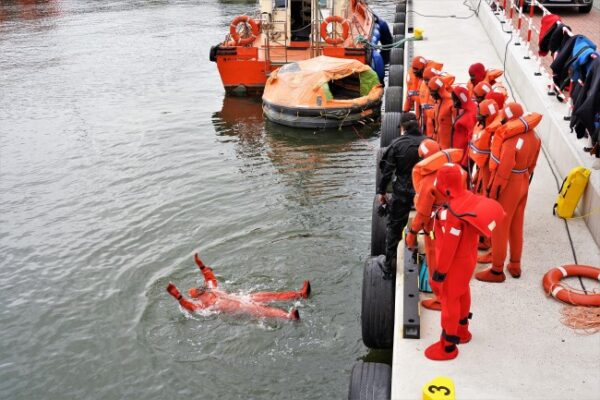
    Na zdjęciu widać szkolenie z zakresu bezpieczeństwa i ratownictwa na wodzie. Uczestnicy w czerwonych kombinezonach ratunkowych obserwują ćwiczenie, podczas którego jedna z osób znajduje się w wodzie. Przy nabrzeżu zacumowane są łodzie ratunkowe i ponton, a na pomoście widoczny jest sprzęt wykorzystywany podczas szkolenia.

    Basic safety training in personal survival techniques – refresher

    Course objective:
    ITR means individual rescue techniques. The training covers such issues as: the organisation of lifesaving at sea, rescue equipment of ships including individual and shared rescue measures. Techniques of people evacuation from ships as well as saving shipwrecked persons, staying on life-rafts and rescue boats as well as in water.

    350 zł netto + 23%VAT

    about 81 €
    See details
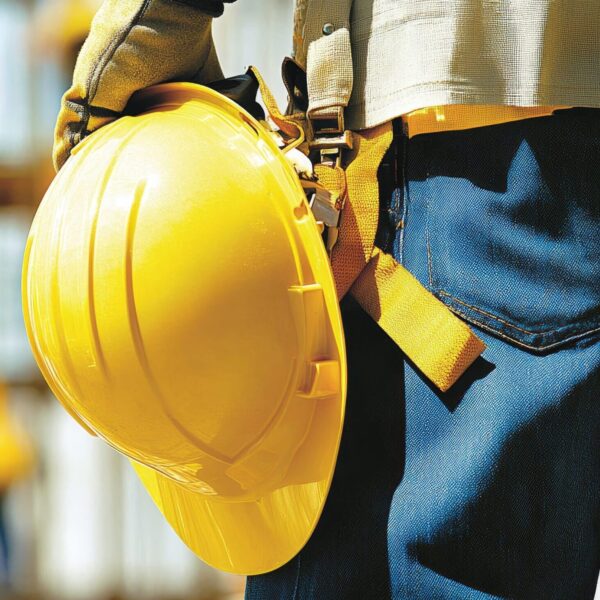
    Na zdjęciu widoczny jest pracownik w odzieży ochronnej i uprzęży zabezpieczającej, trzymający żółty kask ochronny. Ubrany jest w niebieski strój roboczy oraz wyposażony w sprzęt chroniący podczas pracy.

    GWO Basic Technical Training – Hazardous Energies Basic Safety (HEBS)

    GWO compilance: V11
    Course objective:
    The aim of the training is to make participants aware of the hazards associated with various energy sources in a wind turbine and to teach them how to behave safely in their presence. The course teaches how to avoid injuries caused by the accidental release of energy (e.g. electrical, hydraulic, mechanical or gravitational).

    1 100 zł netto + 23%VAT

    about 253 €
    See details
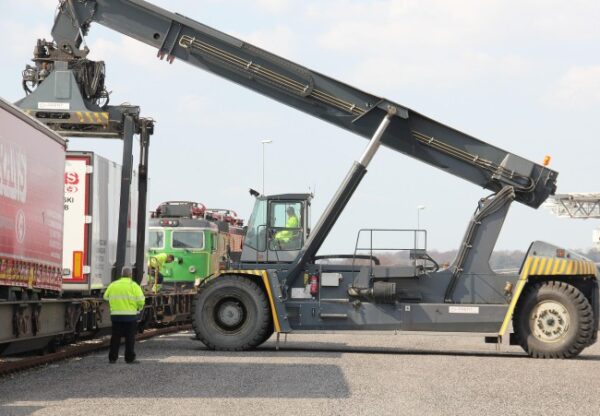
    Na zdjęciu znajduje się duża maszyna przeładunkowa pracująca na placu kolejowym. Operator obsługuje wysięgnik z chwytakiem, który służy do przenoszenia ładunków. W tle widoczne są wagony kolejowe oraz kontenery, a obok maszyny stoi pracownik w kamizelce odblaskowej.

    Cargo Handling Foreman – “Docker Master”

    Course objective:
    The aim of the Cargo Handling Foreman – “Docker Master” course is to provide participants with comprehensive knowledge and skills in organising and supervising work teams, including oversight of cargo handling operations.

    1 200 zł netto + 23%VAT

    about 276 €
    See details
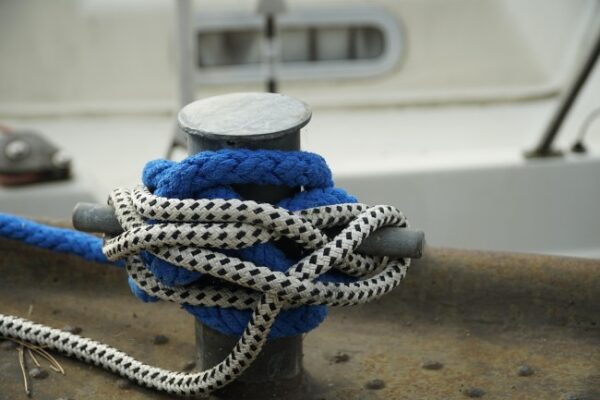
    Na zdjęciu widać stalowy poler, wokół którego ciasno owinięte są grube liny cumownicze w kolorze niebieskim oraz biało-czarnym. Element znajduje się na pokładzie jednostki pływającej i służy do zabezpieczania oraz mocowania lin podczas cumowania. W tle widoczny jest fragment białej burty statku.

    Mooringman and Senior Mooringman

    Course objective:
    The aim of the training is to provide participants with theoretical knowledge and practical skills in the field of safe mooring of vessels.

    600 zł netto + 23%VAT

    about 138 €
    See details

    Why do companies and course participants choose IM Training?

    Average rating
    Grafika przedstawia ocenę w postaci pięciu gwiazdek, z czego cztery są w pełni wypełnione, a piąta częściowo wypełniona, co wskazuje na ocenę około 4,5/5.
    4.97
    Katarzyna
    Crew Manager

    Employees return ready to work

    The training is practical and delivered in conditions similar to real workplace situations. Our employees return with the required certificates, but above all with knowledge and skills they can use at work.

    Jacek
    Course participant

    I am very satisfied

    I took two GWO courses and I am very satisfied. There was plenty of hands-on practice and realistic simulations, and the instructors explained everything clearly and patiently.

    Piotr
    Operations Director

    End-to-end support

    IM Training efficiently organised training for our international team, including the logistics, language and formal requirements. Thanks to the effective coordination, we could focus on the project without involving our own team in organising the trip.

    Asia
    Course participant

    Highly competent instructors

    The practical sessions after the theory are eye-opening. The instructors are highly competent and the course was delivered thoroughly.

    Mateusz
    Offshore Project Manager

    Fast scheduling and flexibility

    The training dates were aligned with our team mobilisation schedule. The quick response, flexible approach and option to train a larger group on the same date made it significantly easier to prepare our employees for the project.

    Mikołaj
    Course participant

    Very good facilities and workstation preparation

    A repair techniques course. Very good facilities and workstation preparation, efficient organisation and a high standard of practical training.

    Paweł
    Course participant

    The training material was thoroughly covered.

    Very good training delivered by competent instructors. The sessions were engaging, the time passed very quickly and there was plenty of hands-on practice. The training material was thoroughly covered.

    Monika
    Course participant

    Modern equipment, no nonsense

    The working at heights course is mainly practical: equipment, fall protection and emergency scenarios. Everything was well organised, the instructors were direct and clear, and the equipment was modern. No nonsense.

    support available through BUR