Skip to main contentSkip to footer

Stevedor, trimmer

SKU: PPZ SZT-TRM

Course objective

The aim of the “Stevedore, Trimmer” course is to provide solid theoretical knowledge and practical skills in cargo handling technology, securing specialized cargo, and performing trimming operations during loading and stowing of cargo on ships and barges.

Duration: 2 days
Location: Gdańsk
Price per person: 900
(about 210 )

Course description

The training allows participants to familiarise themselves with and enhance their knowledge and skills, with particular emphasis on:

  • Performing tasks related to the loading and unloading of goods on various types of vessels, such as general cargo ships, barges, bulk carriers, and container ships
  • Proper distribution and securing of general cargo in ship holds
  • Professional loading and unloading of containers and their safe securing on ship decks
  • Transshipment of containers to different transport means – trucks, wagons, barges, and pontoons – and vice versa
  • Effective securing of general cargo against losses, adverse weather conditions, and theft
  • Observing professional ethics, occupational safety and hygiene rules, and compliance with applicable laws regarding fire protection and environmental protection

Duration

Number of days: 2, Total: 16 hours, Lectures: 16 hours

Who is the training for?

The Stevedore, Trimmer training is intended for:

  • Employees of ports and cargo terminals
  • Persons employed as stevedores and trimmers
  • Shipyard workers involved in cargo loading and securing
  • Operators and technicians handling specialized cargo
  • Individuals planning a career in maritime and inland waterway transport
  • Anyone wishing to expand their knowledge and practical skills in cargo handling and trimming operations

Scope of training and course completion

Scope of the training:

  1. General characteristics of a stevedore/trimmer’s work in seaports, including an overview of port worker duties (nature of work, requirements), rules for moving around port areas and using transport equipment.
  2. Selected issues in cargo science of port goods, impact of main cargo features and packaging on handling and storage. Types of cargo and their characteristic properties. Transport susceptibility.
  3. Role of the seaport in the cargo transport process. Types of terminals and their operations. Role of the stevedore, foreman, freight forwarder, and Customs Office in seaports.
  4. Professional duties of a port worker – stevedore (docker), scope of responsibilities in cargo handling processes and proper securing of maritime goods.
  5. Technical and operational potential, types and characteristics of transport means used in port and maritime operations. Land transport means. Mechanized devices and equipment, general principles of loading and unloading land and sea transport.
  6. Characteristics of slings and auxiliary cargo-handling equipment and their applications.
  7. Organisation of the team on board a ship; familiarisation with types of shipboard work: container handling – twistlocks and their types, lashing, working at heights. Safe execution of cargo handling operations. Accident hazards.
  8. Procedures in the event of accidents or emergencies (e.g., fire, equipment failure), including first aid.
  9. Communication signals (verbal and non-verbal) used during cargo handling operations in ports.
  10. Cargo handling technology. General principles of stowing and securing cargo, including on board ships.
  11. General principles (techniques) of stowing and securing cargo in containers and other transport units. Types of containers. Techniques for storing general cargo in warehouses.
  12. General principles of handling oversized cargo during loading and unloading operations.
  13. Process workflow. Selection of equipment and gear. Knowledge of team cooperation methods and collaboration with the operator.
  14. Legal regulations regarding occupational health and safety, with emphasis on rules related to work as a stevedore/docker.
  15. Hazards arising during work processes and principles/methods for eliminating or minimizing their impact on employees, considering technological changes, work organisation, and workstation modifications – introduction of new devices, equipment, and tools.
  16. Hazardous materials – general characteristics.

The training is concluded with a pass in:

  • Lectures – test

Additional information

After successfully passing the internal examination, the participant receives an unlimited-validity certificate of completion, issued on the basis of §18(2) of the Regulation of the Minister of National Education, authorising the holder to perform the duties of a stevedore and trimmer.

Notice!
In the event of an insufficient number of registered participants, we reserve the right to cancel the course or change its date.

Why choose us?

Certified and audited GWO training centre

We offer one of the broadest training portfolios on the market and operate in accordance with international Global Wind Organisation standards. The quality of our training, the competencies of our instructors and our infrastructure are regularly audited.
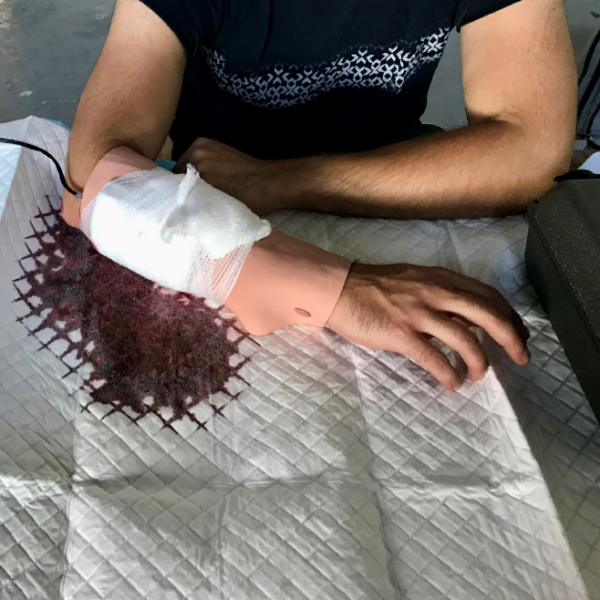
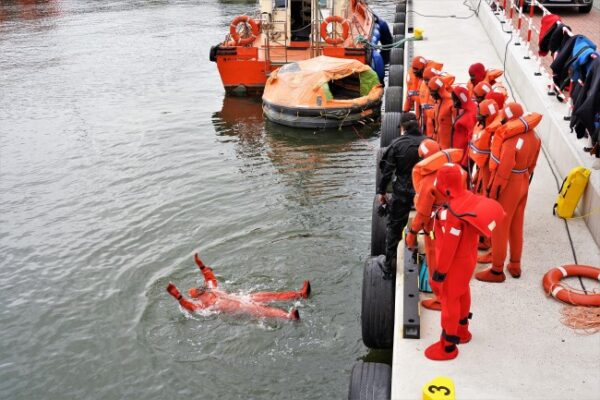
ONLY AT IM TRAINING: a globally unique PCTC crew course using a full-scale training facility

We have a specialist training ground where participants practise realistic scenarios, including firefighting operations on PCTC vessels, RO-RO vessels and ferries, as well as hazards associated with electric vehicle fires.

We were the first in Poland to introduce GWO High Voltage courses

We made competencies available in Poland that previously required training abroad, reducing the time companies need to prepare teams for onshore and offshore projects.

End-to-end training organisation

We manage the entire process, from agreeing a suitable date and arranging transport and accommodation to delivering the training and preparing complete documentation. We also provide end-to-end support for groups and teams travelling from abroad.

Realistic, modern training infrastructure

We train participants using specialist equipment, full-scale structures, training towers, simulators and a pool, so they can practise procedures rather than simply hear about them.

Partnerships with industry and academic leaders

We work with Energy Innovation in Norway and leading maritime institutions in Poland: Gdynia Maritime University and the Polish Naval Academy. We combine international industry experience with expert knowledge and the resources of Polish maritime universities.

We care about more than just training

Accommodation facilities

We assist course participants and companies in arranging accommodation in Gdynia for the duration of their training. We partner with reliable accommodation providers offering a range of standards and price points, all located with convenient access to our training center.

Transport

We arrange transport for course participants from Poland and abroad. We offer transfers from airports, train stations, hotels, or company offices directly to IM Training in Gdynia. For training groups, we can also organize daily transfers between the accommodation and the training center.

Occupational health

In cooperation with an external clinic, we help arrange the required occupational health examinations. The scope may include, among others, the Chester Step Test, an exercise stress test, and the option to obtain an OEUK/OGUK certificate.

Ask about Stevedor, trimmer

Do you need accommodation or transport?


    See other Courses

    GWO Basic Safety Training – Working at Height Refresher (WAH-R)

    GWO compilance: V20
    Course objective:
    The main aim is to refresh and verify skills in working safely at height and rescue techniques. The course aims to reinforce correct practices, update knowledge of equipment and practise evacuation scenarios which (fortunately) rarely occur in day-to-day work.

    1 500  netto + 23%VAT

    about 350 
    See details

    Boat Transfer – Safe movement between vessels and offshore installations (BTR)

    Inter Marine compilance: IMV1
    Course objective:
    To prepare participants for safe movement between different vessels and offshore installations (e.g. wind towers or platforms). The course teaches how to minimise the risk of falling into the water, being crushed by the hull or sustaining injuries when using ladders and transfer systems.

    900  netto + 23%VAT

    about 210 
    See details

    Training in advanced fire fighting

    Course objective:
    During the course, participants learn about ignition sources, the properties of combustible materials, the causes of shipboard fires, and fire detection methods. Practical exercises enable them to acquire skills in firefighting and rescue operations on board vessels, as well as knowledge regarding the design, use, and location of shipboard firefighting equipment and fixed fire-extinguishing systems. They also learn fire-fighting techniques, including those at the command level.

    430  netto + 23%VAT

    about 100 
    See details

    Why do companies and course participants choose IM Training?

    Average rating
    4.97
    Katarzyna
    Crew Manager

    Employees return ready to work

    The training is practical and delivered in conditions similar to real workplace situations. Our employees return with the required certificates, but above all with knowledge and skills they can use at work.

    Jacek
    Course participant

    I am very satisfied

    I took two GWO courses and I am very satisfied. There was plenty of hands-on practice and realistic simulations, and the instructors explained everything clearly and patiently.

    Piotr
    Operations Director

    End-to-end support

    IM Training efficiently organised training for our international team, including the logistics, language and formal requirements. Thanks to the effective coordination, we could focus on the project without involving our own team in organising the trip.

    Asia
    Course participant

    Highly competent instructors

    The practical sessions after the theory are eye-opening. The instructors are highly competent and the course was delivered thoroughly.

    Mateusz
    Offshore Project Manager

    Fast scheduling and flexibility

    The training dates were aligned with our team mobilisation schedule. The quick response, flexible approach and option to train a larger group on the same date made it significantly easier to prepare our employees for the project.

    Mikołaj
    Course participant

    Very good facilities and workstation preparation

    A repair techniques course. Very good facilities and workstation preparation, efficient organisation and a high standard of practical training.

    Paweł
    Course participant

    The training material was thoroughly covered.

    Very good training delivered by competent instructors. The sessions were engaging, the time passed very quickly and there was plenty of hands-on practice. The training material was thoroughly covered.

    Monika
    Course participant

    Modern equipment, no nonsense

    The working at heights course is mainly practical: equipment, fall protection and emergency scenarios. Everything was well organised, the instructors were direct and clear, and the equipment was modern. No nonsense.

    support available through BUR